
Orchestration Techniques: Why You Don’t Need to Hear Every Instrument

How great orchestration turns multiple sections into one expressive sound
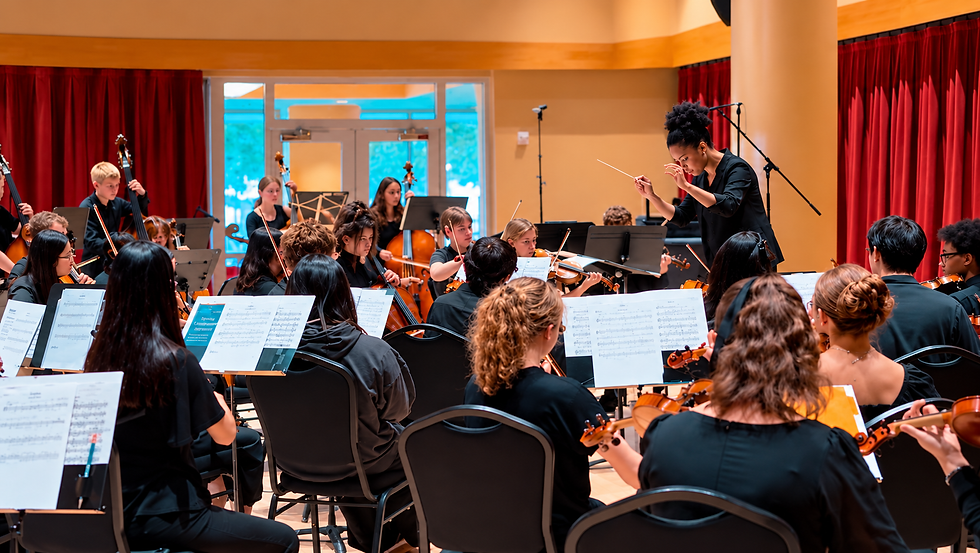
One of the most common mistakes in orchestration is believing that every instrument needs to be heard clearly.
You add horns beneath the strings, but they seem to disappear.
You add bassoons to reinforce the low register, but you cannot clearly identify them.
You double a melody with another section, then begin increasing the volume because the second layer does not sound obvious enough.
This often happens when we approach an orchestra as if it were a collection of independent tracks in a mix.
But orchestration does not always work that way.
Some instruments are meant to be heard as distinct voices. Others are there to add body, depth, weight, warmth, articulation, movement, or color to something else.
You may not consciously hear every instrument.
You hear the sound created by their combination.

The orchestra can become a single instrument
When a horn doubles a cello line, the result is not necessarily supposed to sound like “cello plus horn.”
The two timbres can merge into something broader, warmer, and more resonant than either instrument could create alone.
The same thing can happen when:
A bassoon reinforces the lower strings.
A clarinet adds warmth to a viola melody.
A trumpet gives definition to a violin line.
Horns fill the center between the strings and low brass.
Harp, celesta, woodwinds, and harmonics combine into a single luminous texture.
Low strings and brass create one massive rhythmic body.
This is one of the fundamental powers of orchestration: multiple instruments can create a new composite timbre.
The listener may not think:
“That is a horn.”
“That is a bassoon.”
“That is a viola.”
The listener simply hears the orchestra.
And that is often the point.

John Williams: when the orchestra behaves like one living organism
Listen to Adventures on Earth, from John Williams’ score for E.T. the Extra-Terrestrial.
This is not simply a melody supported by accompaniment.
The orchestration is constantly redistributing energy.
A figure may begin in one section, gain definition from another, receive additional weight from the brass, and then be carried forward by the strings. Woodwinds, brass, strings, and percussion repeatedly exchange roles without interrupting the musical direction.
At many points, it is difficult—and unnecessary—to isolate exactly which instrument is responsible for the total effect.
One section may define the attack.
Another sustains the harmony.
Another reinforces the rhythmic gesture.
Another extends the line into a different register.
The result is not a collection of clearly separated instrumental layers. It is a single musical force whose color, weight, and momentum are continually changing.
This is especially important as the music accelerates toward its final passages. The growing intensity does not come only from adding more instruments or increasing the dynamic.
Williams changes the internal construction of the sound.
Lines are doubled for different reasons. Registers expand. Articulations become more active. Brass, strings, woodwinds, and percussion contribute distinct physical qualities while remaining part of the same forward motion.
You may not consciously hear every doubling.
But if one of those internal components were removed, the music would lose energy, definition, or emotional lift.
The lesson
A supporting instrument does not need to announce its presence.
Its purpose may be to change the behavior of the entire orchestra.
When adding an instrumental layer, do not ask only:
“Can I hear it?”
Ask:
Does it make the gesture move more naturally?
Does it add definition without becoming a second focal point?
Does it connect two registers or instrumental families?
Does it alter the weight, brightness, or urgency of the phrase?
Does the orchestra feel less alive when it is removed?
The value of a part is not always found in its individual visibility.
Sometimes its value is in the way it makes the entire orchestra breathe, move, and speak as one.
Debussy: orchestration as changing color
Claude Debussy’s La mer is one of the clearest examples of orchestration functioning as timbre rather than simple instrumental assignment.
Listen to this performance by Bernard Haitink and the Royal Concertgebouw Orchestra:
Debussy frequently moves musical material between instruments, combines neighboring colors, and allows one texture to dissolve into another.
A figure may begin in the woodwinds, become absorbed by the strings, receive a flash of color from the harp or percussion, and disappear before the listener has time to classify every component.
The objective is not always to present a clearly defined melody accompanied by clearly defined harmony.
The orchestration itself becomes the musical subject.
The changing combinations suggest light, distance, reflection, motion, and atmosphere.
The lesson
A color does not need to remain stable throughout a phrase.
Instead of asking, “Which instrument should play this line?” try asking:
How should the color begin?
Should another instrument gradually enter the sound?
Should the attack and sustain come from different sections?
Should the phrase become brighter, darker, thinner, or more diffuse?
Can the listener perceive the transformation without noticing the individual handoff?
This creates orchestration that feels alive rather than static.
Mahler: instruments can emerge from and return to the mass
Mahler frequently shifts between intimate chamber-like writing and enormous symphonic weight.
Listen to his Symphony No. 5, performed by Claudio Abbado and the Lucerne Festival Orchestra:
At some moments, Mahler wants us to hear an exposed instrument as an individual character.
A trumpet call can feel isolated and unmistakable. A horn can suddenly emerge as a heroic or distant voice. A woodwind line can sound fragile and human.
At other moments, those same instruments become part of a much larger body.
This contrast matters.
An instrument does not have one permanent role throughout an arrangement. Its function depends on the musical moment.
A horn might be:
A solo voice.
Part of the harmonic center.
A bridge between woodwinds and brass.
A reinforcement of the cellos.
Part of a massive brass statement.
A background color that is more felt than consciously heard.
Trying to make the horn equally prominent in all six situations would destroy the hierarchy of the orchestration.
The lesson
Before adjusting the volume of an instrument, define its role in that exact moment.
Ask:
Is it foreground, middle ground, or background?
Is it carrying information the listener must follow?
Is it reinforcing something already present?
Is it changing the color of another section?
Is it preparing a sound that will become important later?
A part can be essential without being prominent.
Holst: several sections behaving as one machine
The opening of Mars, the Bringer of War, from Gustav Holst’s The Planets, offers a powerful example of orchestral fusion.
Listen to this BBC Proms performance:
The repeated rhythmic pattern is not powerful merely because many instruments are playing.
Its effect comes from the way rhythm, register, articulation, orchestral color, and gradual accumulation work together.
Different sections contribute different qualities:
Some provide the rhythmic definition.
Some create weight.
Some add harshness or metallic color.
Some expand the harmony.
Some intensify the sense of forward motion.
The orchestra begins to feel less like a collection of instrumental families and more like a single threatening mechanism.
This is very different from simply copying the same MIDI pattern into several patches and turning everything up.
The lesson
Effective doubling is not only about making something louder.
Before doubling a part, decide what the additional instrument contributes.
Does it add:
Attack?
Sustain?
Weight?
Width?
Brightness?
Roughness?
Rhythmic precision?
Harmonic density?
Two instruments playing the same notes should not necessarily perform the same sonic function.
Do not immediately turn up a buried instrument
In a DAW, it is easy to solo a track, hear an interesting part, return to the full mix, and feel disappointed when that part becomes less obvious.
The immediate reaction is often to raise its volume.
But first, ask:
Does this instrument need to be clearly heard, or does it need to be felt inside the texture?
Perhaps the violas are giving the harmony density.
Perhaps the horns are making the strings feel wider.
Perhaps the bassoon is adding definition to the bass line.
Perhaps the trumpet is adding a subtle edge to the upper strings.
Perhaps the low strings are giving the brass a more physical, grounded attack.
If the musical result feels correct, the instrument may already be doing its job.
The removal test
A useful orchestration exercise is to evaluate a supporting layer by removing it rather than making it louder.
Mute the instrument and listen to the entire phrase again.
Do not ask only, “Can I hear that part?”
Ask:
Did the texture become thinner?
Did the harmony lose warmth?
Did the attack become weaker?
Did the melody lose brilliance?
Did the low end lose definition?
Did the transition become less convincing?
Did the orchestra stop feeling unified?
If removing the part changes the orchestral character, it has a function—even when the listener cannot identify it consciously.

The orchestral role test
For every important layer, complete this sentence:
This instrument is here to add ________.
Possible answers include:
Body
Warmth
Attack
Weight
Width
Motion
Brilliance
Tension
Air
Intimacy
Harmonic density
Rhythmic definition
Avoid answering only:
“It is doubling the melody.”
That describes what the notes are doing, but not what the orchestration is doing.
The same melodic doubling can produce completely different results depending on the chosen instrument, register, articulation, balance, and dynamic.
Balance is not equality
A well-balanced orchestra does not mean that every part has equal volume.
Balance means that every element has the appropriate presence for its function.
The melody may need clarity.
A countermelody may need enough presence to be followed without competing with the theme.
A supporting harmonic layer may only need to influence the color.
A rhythmic ostinato may need definition but not dominance.
A low reinforcement may need to be felt more than heard.
When everything is equally prominent, the listener does not know where to focus.
When orchestral roles are clear, even a dense arrangement can feel transparent.
Create combinations, not just layers
Before adding another patch, think about the new timbre the combination will produce.
Instead of:
“I’ll add horns because the track needs more instruments,”
try:
“I’ll blend horns with the cellos to make the line broader and more noble.”
Instead of:
“I’ll add trumpet because the climax needs to be louder,”
try:
“I’ll use trumpet to give the upper line a clearer, more brilliant attack.”
Instead of:
“I’ll add low strings beneath the brass,”
try:
“I’ll use aggressive low strings to add movement and physical definition beneath the sustained brass weight.”
That small change in thinking moves you from layering toward orchestration.

The goal is not to hear everything
Good orchestration is not about making every track visible.
It is about making every musical role meaningful.
Some instruments speak.
Some support.
Some connect.
Some transform.
Some are noticed immediately.
Others quietly change the way everything around them feels.
And when the combination is right, the listener stops hearing separate sample libraries, patches, and sections.
The orchestra begins to sound like a single expressive instrument.
Build an orchestral palette with purpose
The right orchestral sound is not only about adding more instruments.
It is about choosing colors that serve a clear role inside the arrangement.
Forge Horns brings heroic scale, noble color, expressive articulations, and real rhythmic horn performances.
Forge Trumpet adds definition, bold attacks, calls, accents, and a brilliant edge that cuts through the orchestral texture.
Forge Low Strings delivers aggressive movement, body, and low-register detail with a focused solo and chamber character.
Explore the instruments and discover new colors for your orchestration.

The reminder that orchestration is about color and balance—not making every instrument audible—is especially useful. I’ve been using https://aiposter.pro
The reminder that orchestration is about color and blend—not making every instrument audible—is especially useful. That shift in thinking has changed how I approach dense arrangements; I've been using https://vidnoz.pro/vidnoz-image-to-video